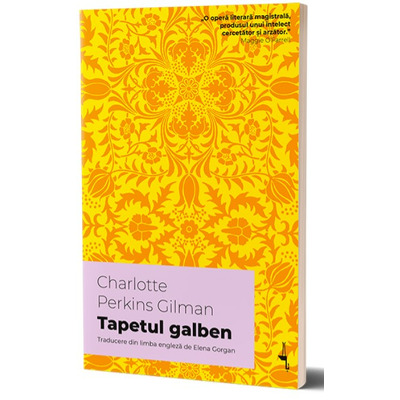
Descriere - The Yellow Wallpaper
"The Yellow Wallpaper" by Charlotte Perkins Gilman is a short story written in the late 19th century, often associated with the feminist literature genre. The narrative explores the themes of mental illness, gender roles, and the constraints faced by women in a patriarchal society. It follows the mental deterioration of a woman who is confined to a room by her husband, who is also her physician, under the pretense of helping her recover from what he diagnoses as temporary nervous depression. The story is presented as a series of journal entries written by an unnamed woman who is taken to a secluded mansion for rest cure. As she spends time in the nursery, she becomes increasingly obsessed with the room's yellow wallpaper, which she finds repulsive yet fascinating. Over time, she perceives a figure of a woman trapped within the wallpaper, reflecting her own feelings of oppression and entrapment. As the protagonist's isolation and desperation grow, she begins to identify with the figure, leading to a dramatic climax where she asserts her will by tearing down the wallpaper, ultimately rejecting the control her husband has over her life. The story is a powerful commentary on the struggles against patriarchal domination and the importance of self-identity and freedom.
Descriere in limba romana pentru "Tapetul galben"
"Tapetul galben", scrisa de Charlotte Perkins Gilman la sfarsitul secolului al XIX-lea, este o nuvela simbolica si profunda, considerata una dintre operele definitorii ale literaturii feministe. Povestea exploreaza teme precum boala mentala, rolurile de gen si efectele devastatoare ale opresiunii patriarhale asupra identitatii si libertatii femeilor. Relatarea este construita sub forma unor insemnari de jurnal ale unei femei fara nume, internata de sotul ei - un medic autoritar - intr-un conac izolat, pentru a urma un tratament de "odihna” impotriva unei presupuse depresii nervoase. Inchisa intr-o camera decorata cu un tapet galben, eroina incepe sa dezvolte o fascinatie obsesiva fata de modelul tapetului, pe care il descrie ca fiind respingator, dar hipnotic. Pe masura ce timpul trece, ea crede ca zareste o femeie prinsa in spatele tapetului, simbol al propriei sale incarcerari emotionale si sociale. In final, intr-un gest de eliberare disperata, protagonista rupe tapetul pentru a "elibera” figura captiva, marcand o ruptura definitiva fata de controlul sotului si fata de constrangerile lumii masculine. Prin intensitatea psihologica si simbolismul sau, nuvela devine o puternica critica a sistemului patriarhal si o pledoarie pentru dreptul femeii la autonomie si exprimare personala.